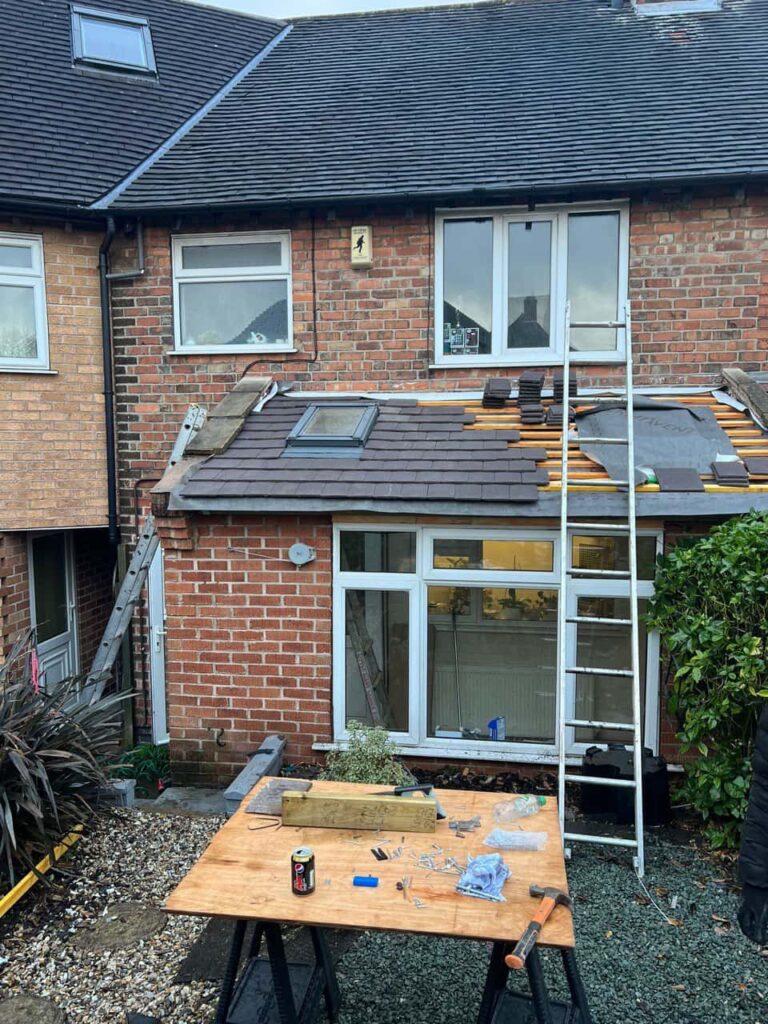
Roof valleys are among the most important areas of a pitched roof because they channel rainwater down towards the guttering system. Where two roof slopes meet, a valley creates a natural route for water to drain away. Lead flashing is often used in these areas to provide a durable, weather-resistant lining that helps prevent water from entering the roof structure.
Although lead is a long-lasting roofing material, it can still develop problems through age, movement, poor installation or exposure to changing weather conditions. For property owners in Earley, Berkshire, understanding how lead flashing works and recognising signs of deterioration can help prevent leaks and more extensive roof damage.
Why Lead Flashing Is Used Around Roof Valleys
Roof valleys handle a greater concentration of rainwater than many other parts of a roof. Without an effective waterproof lining, water could penetrate the junction between the adjoining roof slopes.
Lead flashing is commonly used because it is flexible, durable and can be shaped to follow the contours of the roof. When installed correctly, it creates a protective channel that directs rainwater safely towards the eaves and guttering.
Its flexibility also allows it to accommodate some natural movement within the roof structure. However, the lead must be correctly supported and installed to prevent excessive movement, distortion or damage over time.
Common Problems Affecting Lead Valley Flashing
Even well-installed lead flashing can deteriorate, particularly when exposed to repeated temperature changes and weather conditions. Several issues can affect its ability to keep the roof watertight.
Cracking and splitting
Lead expands and contracts as temperatures change. If the material cannot move as intended, stress may develop and eventually cause cracks or splits. Even a small opening can allow rainwater to reach the underlying roof structure.
Lifting or displacement
Strong winds, deteriorating fixings or movement in surrounding roof materials can cause sections of flashing to lift or become displaced. This may create gaps where water can enter beneath the lead.
Poorly formed joints
Lead valley flashing may require joints where sections meet. If these connections are incorrectly formed or have deteriorated, they can become weak points that allow water to penetrate.
Distortion and stretching
Lead that is not properly supported or has been installed without allowing for thermal movement may become stretched or distorted. This can affect the shape of the valley and interfere with the way water flows towards the guttering.
How Blocked Roof Valleys Can Cause Water Problems
Not every leak around a roof valley is caused by damaged lead. Leaves, moss, twigs and other debris can accumulate in the channel, restricting the flow of rainwater.
When water cannot drain away efficiently, it may build up behind the obstruction and increase the risk of water finding its way beneath the surrounding tiles or flashing.
Blocked valleys can also conceal damage, making it more difficult to identify cracks, lifting or deteriorating joints during a visual inspection.
Keeping roof drainage routes clear is therefore an important part of general roof maintenance. However, clearing debris from a roof valley should be carried out safely, as walking on roof coverings or working at height without suitable equipment can cause injury or further damage.
Warning Signs That Lead Valley Flashing Needs Attention
Problems with lead flashing are not always immediately obvious from ground level. However, certain signs may indicate that the valley needs professional inspection.
Look out for:
- Damp patches or water staining on ceilings.
- Water appearing in the loft after rainfall.
- Visible gaps or lifted sections around the roof valley.
- Cracked, split or distorted lead.
- Loose or displaced tiles beside the valley.
- Persistent damp smells in the roof space.
Internal water staining may appear some distance from the actual point of entry because moisture can travel along roof timbers and other materials. A professional inspection can help trace the source rather than simply treating the visible symptoms.
Practical Maintenance Tips for Lead Roof Valleys
Regular roof checks can help identify developing problems before they cause significant damage. Although lead is durable, it still benefits from appropriate maintenance.
Homeowners should arrange periodic inspections to check for visible distortion, displaced flashing and signs of water ingress. It is also useful to ensure that nearby gutters and drainage outlets remain clear so rainwater can flow away properly.
Avoid attempting to seal cracks with unsuitable products or applying coatings without understanding the condition of the lead. Temporary treatments may fail to address the underlying problem and could make a proper repair more difficult.
Where deterioration is suspected, a roofing specialist should assess the flashing, surrounding tiles and supporting structure. This helps determine whether a localised repair or more extensive replacement is appropriate.
Why Professional Lead Flashing Repairs Matter
Repairing lead flashing around a roof valley requires an understanding of how the material should be shaped, supported and joined. Simply covering a damaged section may not provide a lasting solution if the original cause of the problem remains.
A professional roofer can inspect the full valley, check the condition of adjoining tiles and assess whether the lead has sufficient room for natural movement. They can also identify whether blocked drainage or defects elsewhere on the roof are contributing to the issue.
Correct repairs help restore the valley’s ability to channel rainwater safely away from vulnerable roof junctions.
Professional Lead Flashing Repairs in Earley, Berkshire
Damaged lead flashing around a roof valley can allow water to enter areas that are difficult to access and inspect. Addressing defects promptly helps protect the roof structure and reduces the likelihood of recurring leaks.
LS Roofing Earley provides roofing repair services in Earley, Berkshire, helping property owners identify problems with lead flashing, roof valleys and other vulnerable roofing areas. If you have noticed signs of water ingress or are concerned about the condition of your valley flashing, contact LS Roofing Earley to discuss your requirements.
Conclusion
Lead flashing plays an essential role in protecting roof valleys from water penetration. However, cracking, displacement, poorly formed joints and blocked drainage can gradually affect its performance.
Regular inspections and suitable maintenance help identify these issues before they lead to more extensive damage. For property owners in Earley, Berkshire, professional attention to deteriorating lead valley flashing can help maintain a watertight and reliable roof.
Call us on: 0118 230 9182
Click here to find out more about LS Roofing Earley
Click here to complete our contact form and see how we can help with your roofing needs.