Some roofing problems can be monitored and arranged for repair within a normal timeframe. Others can deteriorate quickly, allow significant water entry or leave parts of the roof exposed to further damage. Understanding the difference is important because not every defect is an emergency, but certain situations should receive prompt professional attention.
For property owners in Earley, Berkshire, emergency roof repairs are most relevant when the roof is actively leaking, has suffered sudden damage or contains loose, displaced or exposed materials that could worsen if left untreated. The objective is not simply to react to the most obvious symptom, but to identify the immediate vulnerability, limit further deterioration and establish what lasting repair is required.
What Types of Roof Damage May Need Emergency Attention?
Emergency roofing situations generally involve active water entry, sudden storm damage, widespread displacement of roofing materials, significant impact damage or visible changes that suggest the roof has become unstable or exposed.
The urgency depends on the extent of the problem and the condition of the surrounding roof. One cracked tile may require repair without being an emergency, while several missing tiles combined with heavy rainfall can create a much more urgent situation.
Significant Active Water Entry Needs Prompt Investigation
Water dripping through a ceiling during rainfall is one of the clearest signs that the roof requires urgent attention.
The visible drip may not be directly beneath the external defect.
Water can travel along roofing materials and timbers before becoming visible inside.
Professional assessment is therefore needed to identify where the water is actually entering.
Rapidly Spreading Damp Patches Can Indicate an Active Leak
Not every urgent leak produces obvious dripping.
A ceiling stain that grows noticeably darker or larger during rainfall can indicate continuing moisture entry.
This suggests that water is actively moving through the roof construction.
The problem should be investigated before repeated wet weather allows it to spread further.
Water Entering More Than One Room Needs Wider Assessment
Several damp areas appearing at the same time can indicate a more substantial roofing problem.
One entry point may be allowing water to travel internally, or there may be several separate defects.
Focusing on only one visible stain may therefore leave another problem unresolved.
A broader inspection is often appropriate.
Heavy Rain Can Expose Hidden Weaknesses
A roof may appear completely dry during lighter showers and then begin leaking during prolonged rainfall.
This can happen when water has enough time to exploit a small weakness.
The defect may involve tiles, valleys, flashing or another detailed area.
Once the weather improves, the leak may stop, but the underlying problem can remain.
Wind-Driven Rain Can Cause Intermittent Leaks
Rainfall does not always reach the roof from the same direction.
Strong winds can force water beneath displaced materials or towards vulnerable junctions.
A leak that only appears during windy conditions still deserves attention.
The intermittent nature of the problem does not mean the roof has repaired itself.
Large Areas of Missing Tiles Can Become Urgent
A single missing tile may remain a localised repair.
Several missing tiles create a larger exposed section.
This reduces the protection provided by the external roof covering and can leave underlying materials more vulnerable to rainfall.
Where the affected area is substantial, prompt professional assessment is appropriate.
Multiple Slipped Tiles Can Disrupt the Roof Covering
Tiles do not need to fall away completely to create a problem.
If several have slipped, the normal overlaps within the roof covering can be disturbed.
This can create routes for water to enter.
The affected section should be checked before further movement occurs.
Loose Roofing Materials Can Continue Moving
Once tiles, slates or other roofing components have become loose, additional wind can cause further movement.
A small affected area can potentially become larger.
This is particularly relevant around exposed parts of the roof.
Prompt repair can help prevent neighbouring materials from becoming involved.
Fallen Roof Material Is a Warning Sign
Pieces of tile, slate or mortar found around the property can indicate damage above.
A small fragment does not always mean an emergency exists.
However, larger pieces appearing suddenly after strong weather should not be ignored.
The source should be identified and the surrounding roof checked for further movement.
Storm Damage Can Affect More Than One Area
Strong winds can expose weaknesses across different parts of a roof.
The most obvious missing tile may only be one part of the problem.
Ridges, edges, flashing and neighbouring tiles may also have moved.
Professional assessment helps determine whether the damage is genuinely localised or more widespread.
Exposed Underlying Roofing Materials Need Attention
When enough of the external covering has been displaced to expose the layers beneath, the roof becomes more vulnerable.
These underlying materials are not intended to remain fully exposed to prolonged weather.
The larger the exposed area, the greater the need for prompt intervention.
Professional repair can restore protection before further deterioration develops.
Valley Damage Can Produce Significant Water Entry
Roof valleys collect water from adjoining slopes.
Because they handle a high volume of rainfall, defects in these areas can become particularly noticeable during wet weather.
Damage to the valley or neighbouring roofing materials can allow water to enter quickly.
Prompt assessment can identify the actual source and the extent of repair required.
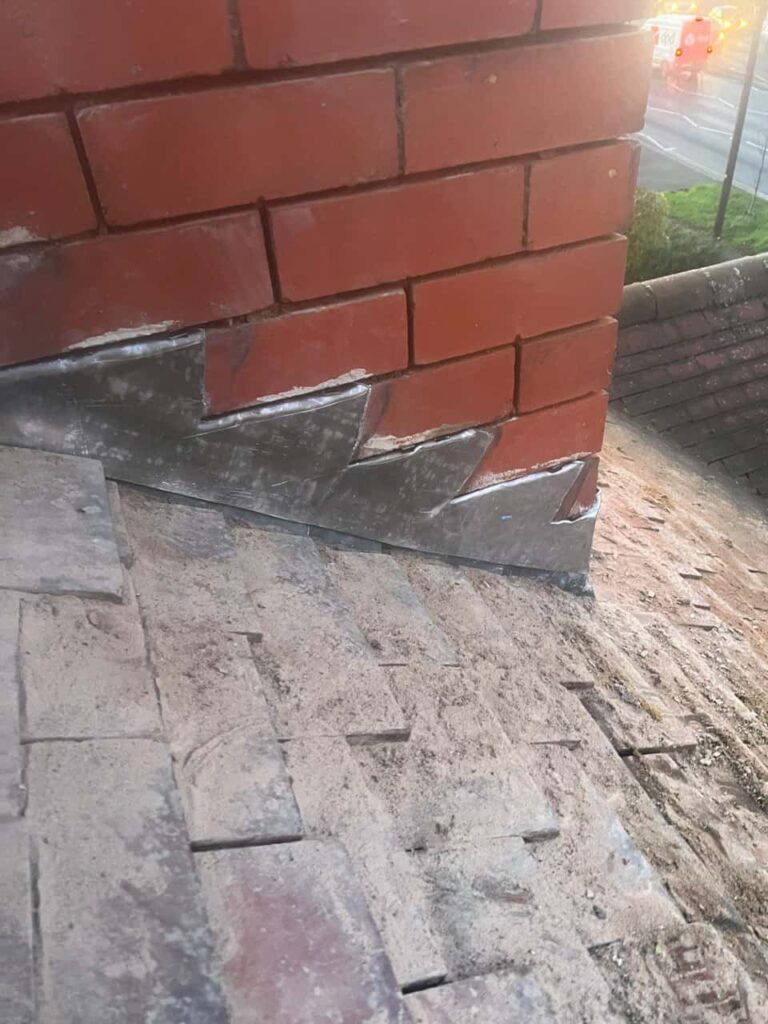
Flashing Failure Can Create Concentrated Leaks
Flashing protects vulnerable roof junctions.
If it becomes significantly displaced or damaged, water can gain access around the affected detail.
The leak may then travel before becoming visible internally.
Professional inspection is important because the visible damp patch may not be directly beneath the failed flashing.
Roof Junctions Can Be Difficult to Diagnose
Some of the most troublesome leaks occur where different roof sections or materials meet.
A relatively small defect at a junction can allow water through during particular weather conditions.
Surface patching may not resolve the problem if the true entry point is not identified.
A proper inspection should consider the complete detail.
Ridge Damage Can Require Prompt Repair
The ridge sits in a highly exposed position.
If ridge components move significantly, neighbouring areas can also become vulnerable.
The urgency depends on how much movement has occurred and whether materials remain secure.
Sudden visible changes should be professionally assessed.
Roof Edge Damage Can Worsen Quickly
Roof edges receive direct wind exposure.
Loose or damaged materials at the perimeter can therefore be vulnerable to further movement.
Once an edge begins deteriorating, adjoining components can also become affected.
Prompt repair can help keep the problem contained.
Sudden Changes in the Roofline Need Professional Assessment
Noticeable sagging or distortion should not be treated like an ordinary broken tile.
A change in the roofline can have several causes.
Where the change has developed suddenly or appears to be worsening, professional assessment should not be delayed.
The condition should be considered more broadly than the external covering alone.
A Partial Roof Failure Is an Emergency Situation
Where a section of the roof has visibly failed, the issue clearly goes beyond normal maintenance.
The affected area needs to be assessed so that the immediate problem can be contained.
The surrounding roof should also be checked because neighbouring materials may have been disturbed.
The long-term repair can then be planned according to the extent of the damage.
Impact Damage Should Be Checked Promptly
A substantial impact can damage more than the visible outer covering.
Tiles may break, nearby materials may move and hidden areas may also be affected.
The apparent size of the external damage does not necessarily show the complete extent of the problem.
Professional assessment provides a clearer picture.
Falling Branches Can Damage Several Components
A large branch can affect tiles, ridges, flashing and other roof details at the same time.
Even after the branch has been removed, hidden damage may remain.
The surrounding section should therefore be checked rather than assuming that removing the branch has resolved the roofing problem.
Existing Defects Can Become Emergencies During Bad Weather
A minor roofing problem can change quickly when severe weather develops.
A slightly slipped tile or small leak may worsen under repeated wind and rain.
Urgency should therefore be based on the current condition rather than how minor the problem appeared when first noticed.
Changing symptoms are important.
A Recurring Leak That Suddenly Worsens Needs Attention
Some roofs develop occasional small leaks that remain relatively consistent for a period.
If the leak suddenly becomes much more severe, the underlying defect may have enlarged.
Neighbouring materials may also have become involved.
This change is a strong reason for prompt investigation.
Temporary Repairs Can Deteriorate
Temporary measures can be useful for managing an immediate roofing problem.
They should not automatically be considered permanent.
If water begins entering again around a previously temporary repair, the underlying defect still needs proper attention.
Repeated temporary treatment can allow the original issue to remain unresolved.
Emergency Work and Permanent Repair Are Not Always the Same
In some situations, the first priority is to make the affected area secure and limit further water entry.
A permanent repair may then follow after the roof has been fully assessed.
This staged approach can be appropriate when the immediate problem needs containing.
Temporary protection should still lead to a proper lasting solution.
Stopping the Leak Is Only Part of the Repair
During an emergency, reducing water entry is understandably the first concern.
However, the cause of the leak still needs to be identified.
A slipped tile, failed flashing detail or damaged valley may be responsible.
Professional repair should address that source rather than only the visible symptom.
The Internal Leak May Be Away From the External Defect
Water can travel considerable distances within a roof.
This means the external problem may not be directly above the ceiling stain.
Repairing the wrong area can leave the true defect untouched.
Professional leak detection considers how water may have travelled before becoming visible.
A Large Leak Can Still Come From a Localised Defect
A dramatic internal leak does not automatically mean the whole roof has failed.
A relatively small but badly positioned defect can sometimes allow a surprising amount of water through.
The complete roof should not be judged by the volume of water alone.
The source and surrounding condition matter more.
A Small Damp Mark Can Still Be Significant
The opposite is also true.
A modest stain may represent repeated moisture entry over a longer period.
Because the water may remain concealed before reaching the ceiling, the visible mark does not necessarily show the full extent of the problem.
Investigation is therefore worthwhile when the mark repeatedly changes after rainfall.
Not Every Roof Leak Is an Emergency
A small historic stain that remains dry is different from active dripping.
Likewise, one minor localised defect may require repair without needing immediate emergency work.
The urgency should depend on whether water is actively entering, materials are unstable or damage is rapidly worsening.
This distinction helps keep the response proportionate.
One Cracked Tile Is Not Automatically an Emergency
A single cracked tile may need replacement.
However, if the surrounding roof remains sound and there is no active water entry, it may be suitable for planned repair.
Its position and extent of damage still matter.
Professional assessment helps determine the appropriate level of urgency.
General Weathering Is Not an Emergency
Roofing materials naturally change in appearance over time.
Discolouration, surface ageing and weathering alone do not indicate an emergency.
The important question is whether the materials remain secure and functional.
Repair decisions should be based on actual condition rather than appearance alone.
Moss Does Not Automatically Mean Urgent Repair Is Needed
Moss can make a roof appear heavily aged.
Its presence does not by itself prove that the roof is leaking or unstable.
The underlying tiles or slates need to be assessed separately.
Emergency roofing work should be reserved for genuine functional problems.
Roof Age Alone Does Not Determine Urgency
An older roof is not automatically an emergency.
Some older roofs remain serviceable, while newer roofs can still suffer sudden damage.
The current condition of the roof is more important than its age alone.
Active failure, movement and water entry should guide the response.
Several Defects Together Can Increase the Urgency
One small problem may be relatively manageable.
Several connected problems can create a much more vulnerable section.
For example, slipped tiles combined with damaged flashing and active water entry deserve greater attention than one isolated defect.
The complete pattern should be considered.
Repeated Emergencies Can Indicate Wider Deterioration
A single emergency can result from a localised event.
Repeated urgent repairs across different parts of the roof can indicate a broader condition problem.
If this pattern develops, the roof should be assessed as a whole.
The objective is to understand whether localised repairs remain appropriate.
Strong Weather Can Expose Existing Weaknesses
Severe weather does not always create a defect from nothing.
It can reveal materials that were already becoming loose or deteriorated.
A roof that appears suddenly damaged after wind may have contained an existing weakness.
Professional assessment should therefore consider both the immediate damage and the surrounding condition.
Old Internal Stains Should Be Distinguished From Active Water Entry
A ceiling mark can remain visible long after the original leak has been repaired.
An older stain is not automatically evidence of a current emergency.
One useful indicator is whether the area changes during rainfall.
Fresh dampness or spreading discolouration suggests current water entry.
Roof-Space Signs Can Provide Useful Evidence
Where the roof space can be observed safely, fresh dampness or active dripping can help confirm that the leak is current.
Staining can also indicate previous water routes.
This evidence can support professional diagnosis.
It should not be relied upon as the only way to locate the external defect.
Avoid Unsafe Roof Access During an Emergency
A damaged roof can contain wet, loose or unstable materials.
Attempting to access it without suitable equipment can create further problems.
Useful observations can often be made from ground level or inside the property while professional assistance is arranged.
The aim should be to resolve the roofing defect without creating unnecessary additional risk.
Warning Signs That Emergency Roof Repairs May Be Needed
Prompt professional attention may be appropriate where there is:
- substantial active water entry;
- rapidly spreading dampness;
- multiple internal leaks;
- a large area of missing or displaced tiles or slates;
- loose roofing materials after strong winds;
- significant valley damage;
- failed or displaced flashing with active water entry;
- substantial ridge or edge damage;
- exposed underlying roof areas;
- obvious impact damage;
- a noticeable recent change in the roofline;
- a visibly failed roof section;
- a recurring leak that has suddenly become much worse.
These signs do not automatically mean the entire roof requires extensive work. They indicate that the affected area should be assessed promptly.
Emergency Repairs Should Focus on the Immediate Vulnerability
The first objective during an emergency is to prevent the situation from continuing to deteriorate.
This may involve securing displaced materials or limiting water entry.
The work should remain proportionate to the problem.
Sound areas of the roof should not be disturbed unnecessarily.
Localised Emergency Damage Can Still Have a Localised Solution
The word emergency can sound as though the complete roof has failed.
That is often not the case.
Sudden storm damage may affect only one section while the remainder of the roof remains serviceable.
Professional assessment helps ensure that the repair stays focused where appropriate.
Widespread Damage Needs a Broader Approach
Where several roof areas have been affected at the same time, repairing only the most obvious defect may not be enough.
A wider inspection is useful.
This allows all affected sections to be identified before the longer-term repair plan is determined.
The extent of work should reflect the actual pattern of damage.
Prompt Repair Can Stop Damage From Spreading
One of the main reasons genuine roofing emergencies should not be delayed is that exposed areas can deteriorate further.
Continued rain or wind may affect neighbouring materials.
Prompt intervention can help keep the problem contained.
This can make subsequent repair more straightforward where the damage is still localised.
Emergency Repairs Do Not Automatically Mean Roof Replacement
A severe leak or sudden area of storm damage does not automatically mean the complete roof needs replacing.
If the problem is confined to one repairable area and the surrounding roof remains sound, targeted work may still be appropriate.
Replacement should be based on overall roof condition rather than the urgency of one incident.
Professional Diagnosis Still Matters During an Emergency
Urgency should not replace careful assessment.
A quick response is valuable, but the repair still needs to address the correct defect.
The most visible problem may not be the actual source of the leak.
Professional diagnosis helps ensure that the immediate work is effective.
The Surrounding Roof Should Also Be Checked
A damaged tile or flashing detail does not exist in isolation.
Neighbouring materials may have been disturbed by the same weather or impact.
Checking the surrounding section helps determine whether the visible defect is the only problem.
This can reduce the chance of a second issue becoming apparent shortly afterwards.
Why Professional Emergency Roof Repairs Matter
Emergency roof repairs require both speed and accurate judgement.
The aim is to identify the immediate vulnerability, reduce the risk of further deterioration and determine what lasting work is actually required.
Professional roofers can assess the affected area, the surrounding materials and the likely route of water entry.
This provides a more reliable basis for repair than reacting only to the most obvious internal symptom.
Emergency Roof Repairs in Earley, Berkshire
At LS Roofing Earley, we understand that sudden roof damage can be difficult to assess from inside the property or from ground level. A heavy leak, several displaced tiles or visible storm damage may have a straightforward cause, or the problem may extend beyond the first visible defect.
Our approach is to assess the affected area, identify the immediate vulnerability and determine what repair is appropriate based on the condition of the roof. Where the damage is localised, the work can remain focused. Where several connected areas are involved, a broader assessment may be necessary.
For properties in Earley, Berkshire, prompt professional attention can help establish whether a roofing problem genuinely requires emergency repair and what needs to be done to prevent it from developing further.
Conclusion
Roofing problems that may require emergency repairs include substantial active leaks, rapidly spreading dampness, large areas of missing or displaced roof covering, significant storm or impact damage, exposed underlying materials and sudden visible changes to the roof.
The key factor is whether the defect is active, unstable or likely to worsen quickly. One cracked tile or an older dry stain may require planned repair without being an emergency, while several displaced tiles during heavy rainfall may need much more urgent attention.
Professional emergency roof repair should focus on identifying the actual source of the problem, containing the immediate vulnerability and then determining whether a localised or wider repair is appropriate. This helps prevent a manageable defect from becoming more extensive.
If you have sudden or serious roof damage at your property in Earley, Berkshire, contact LS Roofing Earley. We can assess the affected area, establish the extent of the problem and recommend appropriate emergency roof repairs based on the actual condition of your roof.
Call us on: 0118 230 9182
Click here to find out more about LS Roofing Earley
Click here to complete our contact form and see how we can help with your roofing needs.